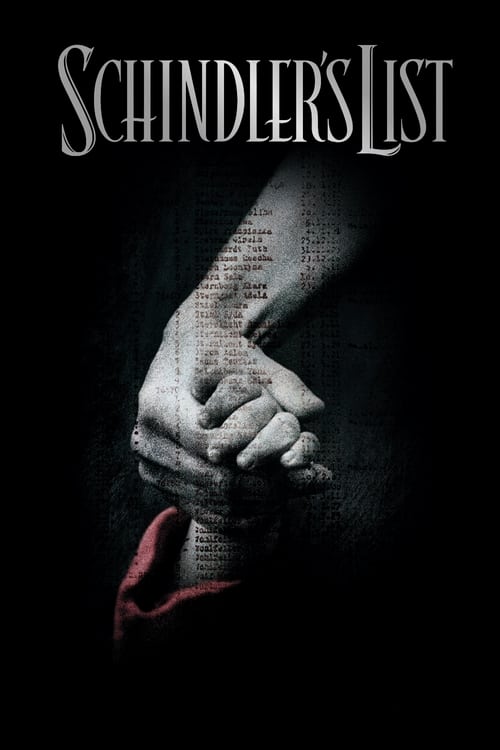
Schindlers List
Overview
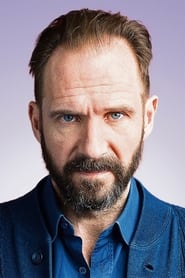
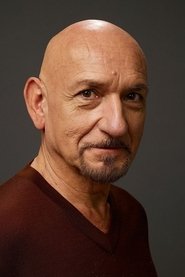
Schindler's List is a 1993 epic historical drama directed by Steven Spielberg, based on the true story of Oskar Schindler, a German businessman who saved the lives of over 1,100 Jews during the Holocaust. The film is shot almost entirely in black and white, giving it a documentary-like realism and gravitas. It is set in Krakow, Poland, during World War II, beginning in 1939 when the German army invades and forces the Jewish population into a ghetto. Oskar Schindler (Liam Neeson) is a tall, handsome, charismatic, and opportunistic Nazi Party member who arrives in Krakow looking to make his fortune. He takes over a confiscated enamelware factory and, with the help of a Jewish accountant named Itzhak Stern (Ben Kingsley), staffs it with Jewish laborers because they are the cheapest workforce available. Schindler is initially motivated purely by greed — he enjoys his wealth, his mistresses, and his lavish lifestyle. However, as the Nazi persecution escalates under the command of the sadistic SS officer Amon Goeth (Ralph Fiennes), Schindler begins to change. He witnesses the brutal liquidation of the Krakow Ghetto, where soldiers in civilian clothes run through the streets shooting innocent people. He sees Goeth randomly shoot prisoners from his balcony. He watches as children are loaded onto trucks and driven away. Over time, Schindler uses his charm, his money, and his connections to protect "his" Jews, arguing that he needs them to run his factory. He has a list drawn up — Schindler's List — of over a thousand names, people he will bribe the Nazis to let him take to a new factory in his hometown of Brunnlitz, in the relative safety of the Sudetenland. The film's most devastating scene is when Schindler, having saved over a thousand people, breaks down and weeps, saying he could have saved more — he could have sold his car, his gold pin, to save just one more life. Itzhak Stern tells him that the lives he saved will be his legacy, and the survivors and their descendants — over 6,000 people today — line up to place stones on his grave in Jerusalem. Ralph Fiennes delivers a terrifying performance as Goeth, a man capable of casual cruelty and genuine self-hatred. The film includes one brief moment of color: a little girl in a red coat, the only spot of color in the black-and-white film, who is later seen dead on a cart of bodies. Schindler's List won seven Academy Awards, including Best Picture, Best Director, Best Adapted Screenplay, and Best Cinematography. It is one of the most important and powerful films ever made about the Holocaust, a testament to the capacity for both unimaginable evil and extraordinary goodness in the human heart.